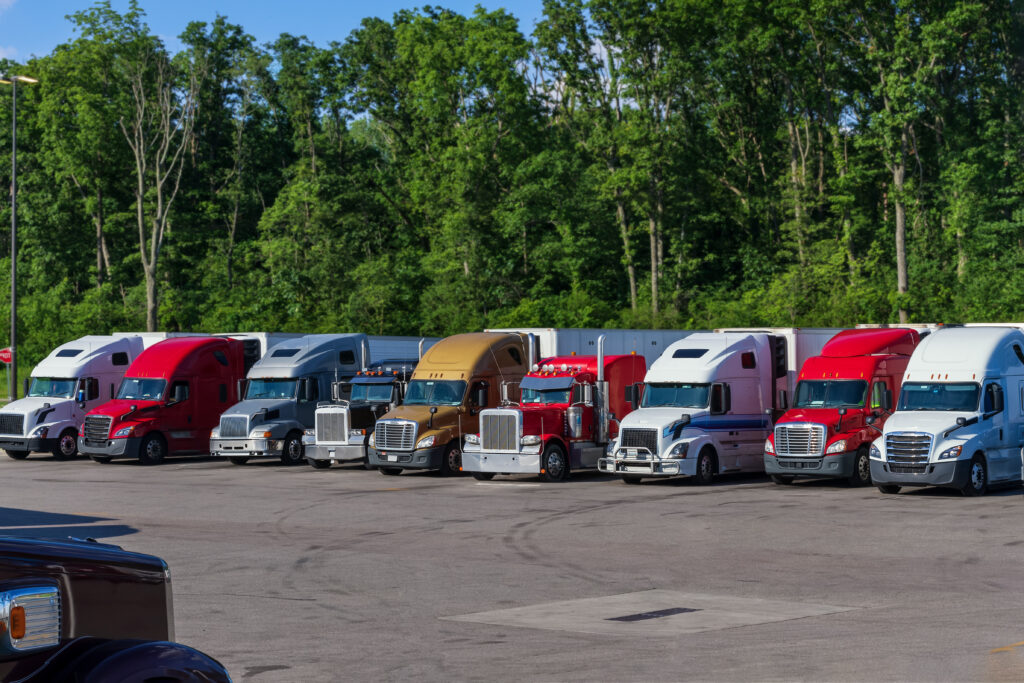
Manufacturers are in the business of making products, and distributors are in the business of getting those products where they need to go. So why are you managing a private fleet right now? Countless companies devote valuable time, money, and resources to recruiting drivers, maintaining vehicles, managing compliance, monitoring safety, and solving transportation challenges. Although a private fleet can be the right strategy for some organizations, rising customer expectations and increasingly complex supply chains are forcing many business leaders to confront a critical question: Are we running our business, or are we running a trucking company?
For manufacturers and distributors whose fleet operations have become a costly distraction from the work that truly drives growth, outsourcing transportation and fleet management can provide the expertise, flexibility, and focus needed to strengthen service while allowing the business to concentrate on what it does best.
Why Are Manufacturers and Distributors Running Their Own Private Fleet?
Most companies don’t set out to become transportation providers.
Instead, it happens gradually. A customer needs more reliable delivery. Service expectations increase. Visibility becomes a priority. Owning a few trucks feels like the best solution.
Initially, the decision makes sense. A private fleet can provide greater control over schedules, customer service, and delivery performance. However, transportation operations rarely stay small for long. As businesses grow, so do the responsibilities that come with managing trucks, drivers, maintenance programs, compliance requirements, technology systems, and safety initiatives.
Before long, transportation evolves from a support function into a business operation of its own. Leadership teams find themselves discussing driver shortages and vehicle utilization instead of customer acquisition, product development, or operational improvement.
Without realizing it, many manufacturers and distributors become logistics companies.
What Are the Hidden Costs of Managing a Private Fleet?
When companies evaluate fleet expenses, they typically focus on visible costs such as fuel, maintenance, insurance, equipment, and payroll.
Those costs are important, but they only tell part of the story.
The greater cost is often the time and attention required to manage the operation. Every breakdown requires coordination. Every driver vacancy requires recruiting efforts. Every compliance change requires oversight. Every vehicle replacement requires capital planning.
Meanwhile, leadership teams spend time solving transportation challenges rather than focusing on strategic business goals.
The real question is not simply, “What does our fleet cost?” Instead, companies should ask, “What opportunities are we missing because we’re spending so much time managing transportation?”
For many organizations, the answer can be significant.
When Does a Private Fleet Make Sense?
Despite the challenges, private fleets are not always the wrong choice.
Some manufacturers and distributors operate highly specialized delivery networks that require unique equipment, dedicated drivers, or strict handling procedures. Others may have delivery patterns that make fleet ownership financially advantageous.
When transportation directly supports a company’s competitive advantage, operating a private fleet can be a strategic investment.
However, businesses should regularly evaluate whether their transportation operation continues to support their long-term objectives. Market conditions change. Customer demands evolve. Costs fluctuate. What made sense five or ten years ago may not be the best solution today.
The key is ensuring that transportation strategy aligns with business strategy.
When Should a Company Outsource Fleet Management?
Many organizations reach a point where transportation complexity begins to outweigh the benefits of managing it internally.
This often occurs when the business is expanding into new markets, struggling with driver recruitment, facing rising maintenance costs, experiencing capacity challenges, or investing significant management resources into fleet operations.
In other cases, leadership teams simply recognize that transportation is consuming time that could be directed toward higher-value priorities.
Outsourcing fleet management allows organizations to transfer much of that complexity to transportation experts while maintaining a focus on service, customer satisfaction, and operational performance.
Rather than investing resources into becoming better fleet managers, companies can invest those resources into becoming better manufacturers, distributors, and supply chain partners. Take a quick read of this Guide to Outsourcing Truck Transportation.
What Are the Benefits of Outsourcing Transportation Operations?
One of the biggest benefits of outsourcing transportation is the ability to focus on core competencies.
Instead of managing trucks, companies can focus on growing their business. Instead of recruiting drivers, they can focus on serving customers. Instead of investing in transportation assets, they can invest in innovation, technology, products, and people.
Transportation providers bring specialized expertise, proven processes, advanced technology, and established networks that would be difficult and expensive for many organizations to build on their own.
Outsourcing can also provide greater flexibility. As demand changes, transportation capacity can scale accordingly without requiring companies to continually purchase equipment, hire drivers, or expand infrastructure.
Most importantly, organizations gain access to transportation professionals whose sole focus is optimizing delivery performance and supply chain efficiency.
Is It Cheaper to Outsource Transportation Than Operate a Private Fleet?
The answer depends on the business, but it’s often the wrong question.
Many organizations compare outsourcing costs to the direct expenses of operating a fleet. However, a more accurate comparison considers the total cost of ownership, including management time, administrative overhead, recruiting costs, compliance efforts, equipment replacement, maintenance infrastructure, and technology investments.
When those factors are included, outsourcing transportation can often deliver savings while improving service and operational flexibility.
Even in situations where the cost difference is relatively small, the ability to redirect internal resources toward growth initiatives can create meaningful long-term value.
The goal isn’t simply to reduce transportation costs. The goal is to maximize business performance.
How Do You Know It’s Time to Stop Running Your Own Fleet?
Sometimes the answer becomes obvious.
If transportation challenges dominate leadership discussions, it may be time to reconsider your strategy. If recruiting drivers feels like a full-time business function, it may be time to consider alternatives. If maintenance schedules, compliance requirements, and fleet management responsibilities are preventing your team from focusing on growth, customer service, and operational excellence, the signs are difficult to ignore.
Perhaps the most revealing question is this:
If you were building your company from scratch today, would you choose to own and manage a trucking fleet?
Would you invest in trucks, trailers, maintenance facilities, compliance programs, driver recruiting, safety management, and transportation technology?
Or would you partner with an organization that already specializes in those areas?
For many manufacturers and distributors, the answer is becoming increasingly clear.
The most successful businesses understand where they create the greatest value. Manufacturers create value through production, innovation, and quality. Distributors create value through service, inventory management, and customer relationships. Transportation providers create value through logistics expertise, fleet management, and delivery execution.
Trying to excel at all three can stretch resources, create complexity, and distract from what matters most.
So the next time your leadership team spends another meeting discussing equipment maintenance, driver turnover, or fleet utilization, take a step back and ask a simple question:
Are we solving manufacturing and distribution challenges?
Or are we spending our time running a trucking company?
Because if transportation isn’t your business, it may be time to let transportation experts handle it while you focus on growing yours.